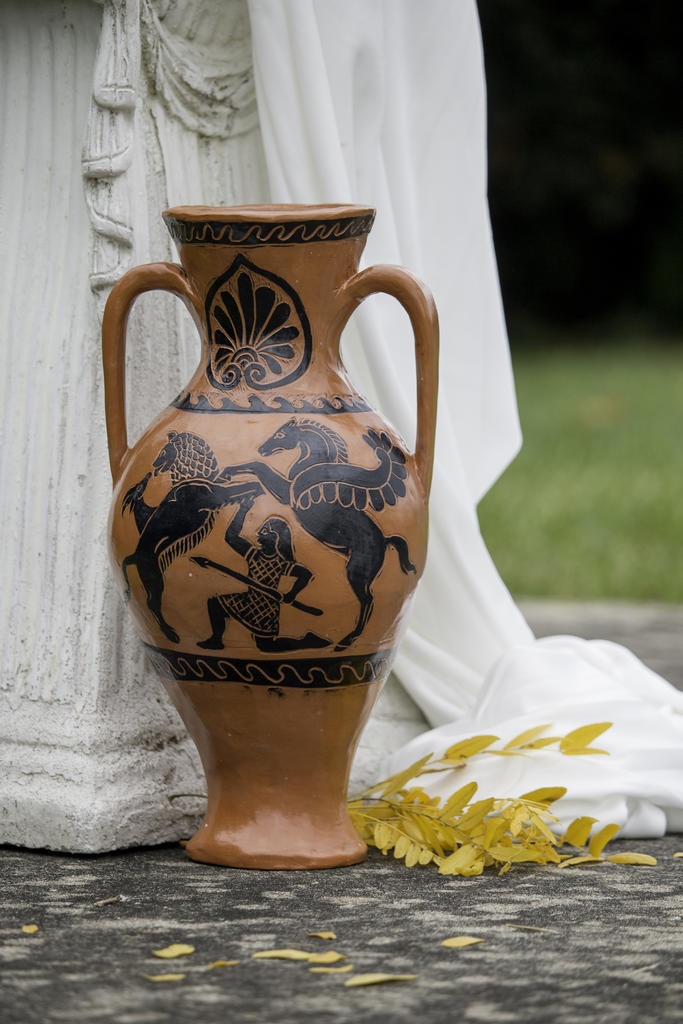
Weathered Sign
Make a decorative sign for your home or garden!


 Play Video
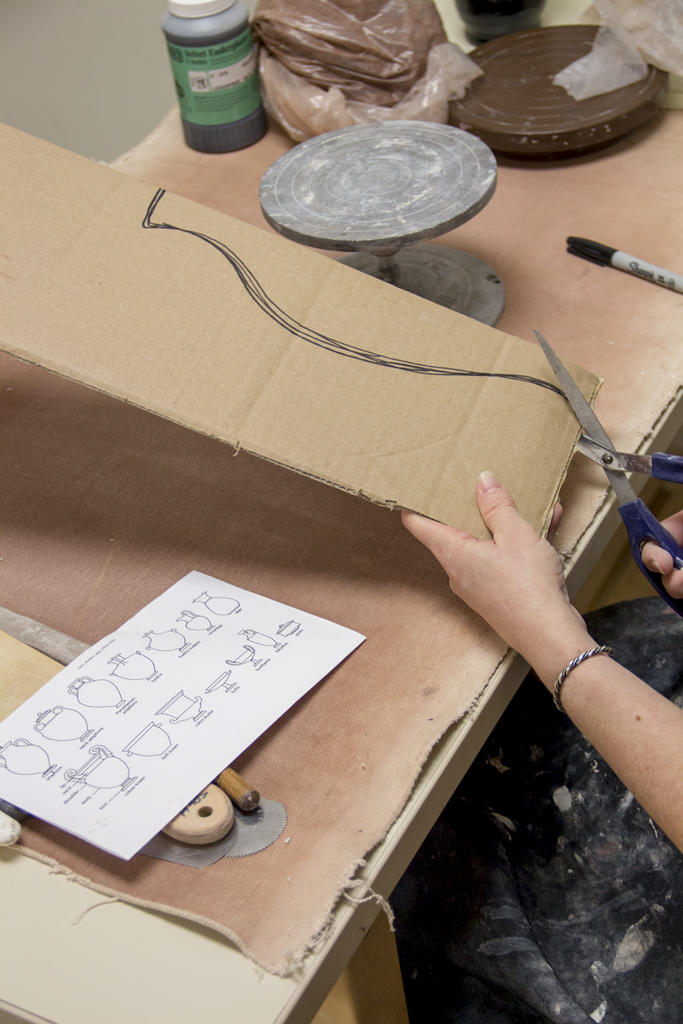
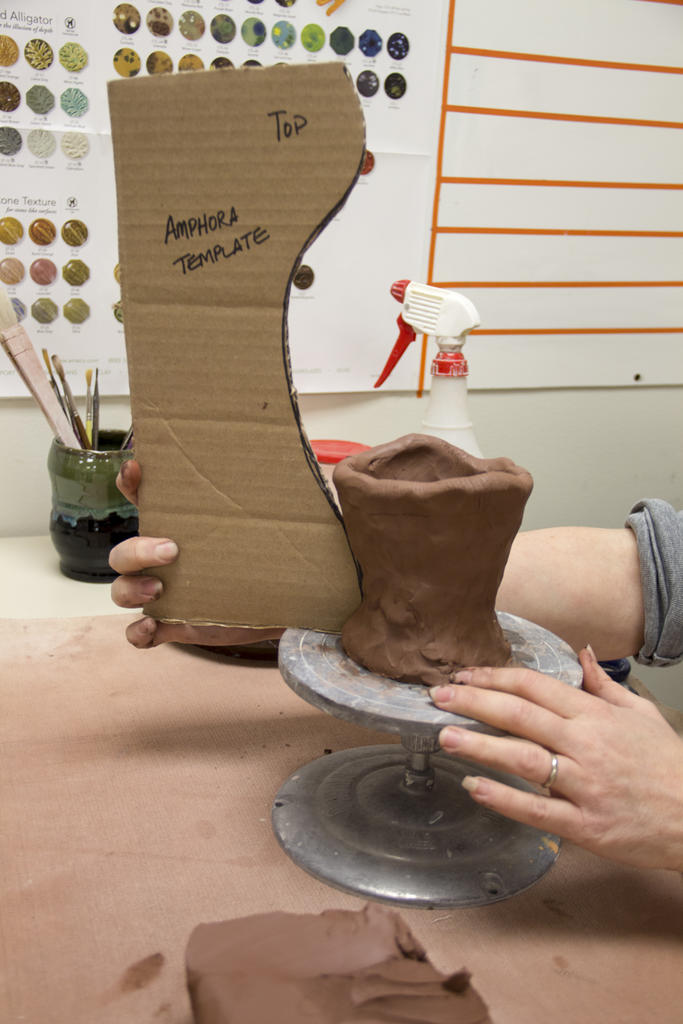
Research ancient Greek vessel shapes and create a template using cardboard. Cut out template. Use the negative space portion of the template.
Note: Although most pottery in Ancient Greece was thrown on a potters wheel, for this project we're using coil-building.
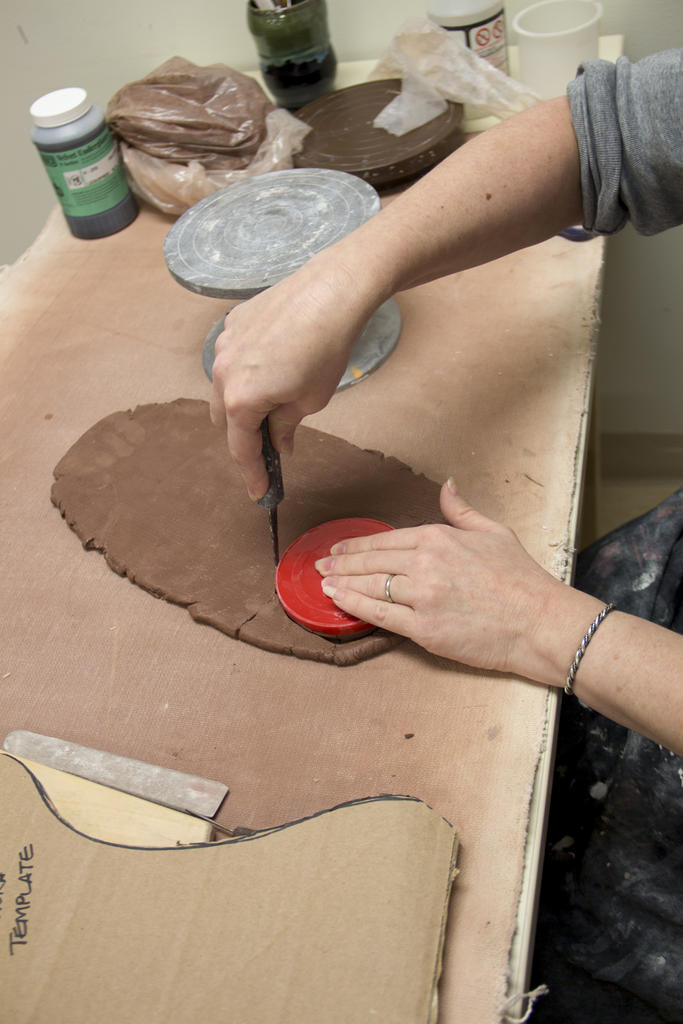
Make a slab 1/2" thick . Cut out a circle for the base.
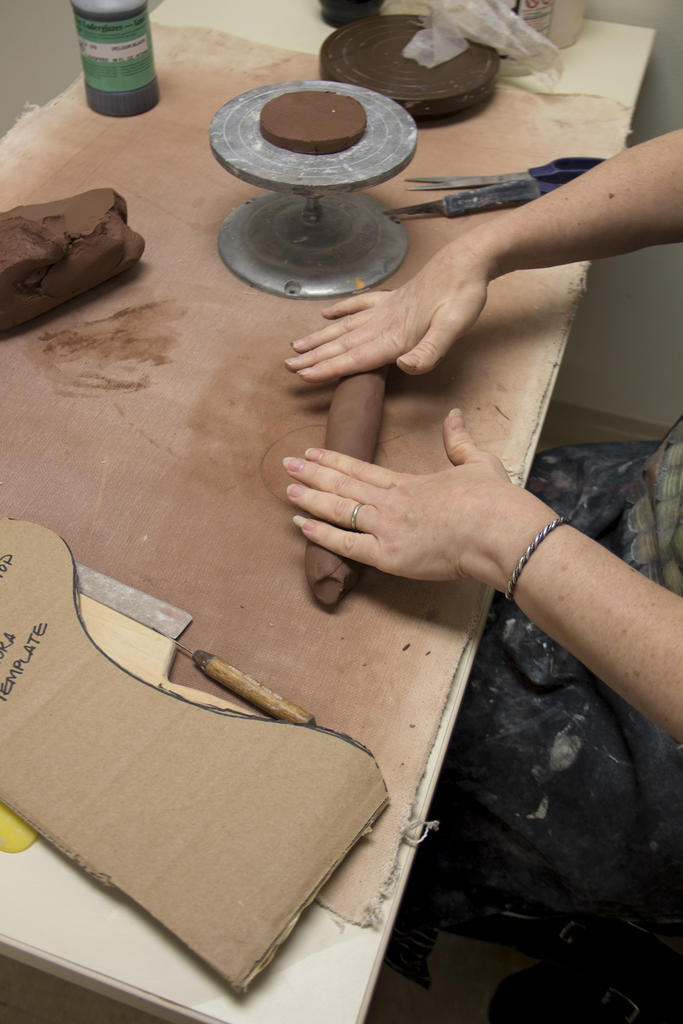
Roll clay into thick coils. Make the coils at least 1" thick. Clay should be fairly soft.
Alternately, instead of rolling coils by hand, extrude coils.
Slip and score coils to join. Use fingers or a wood tool to mesh clay together. Thin coils by pinching upwards. After joining and pinching walls should be 1/4" to 1/2" thick.
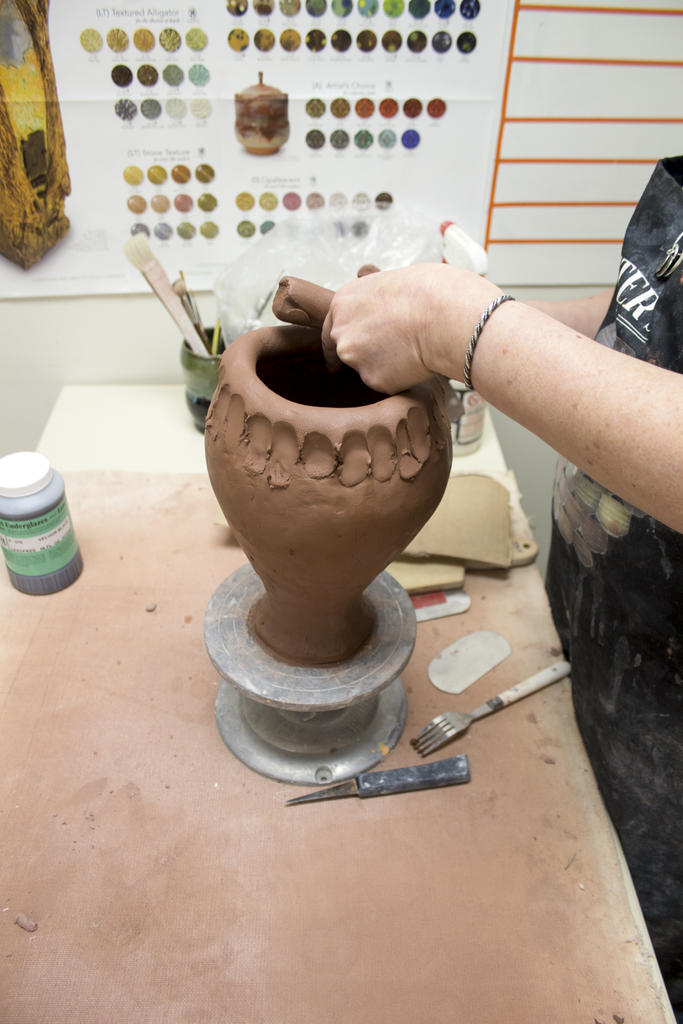
Use template frequently to guide form.
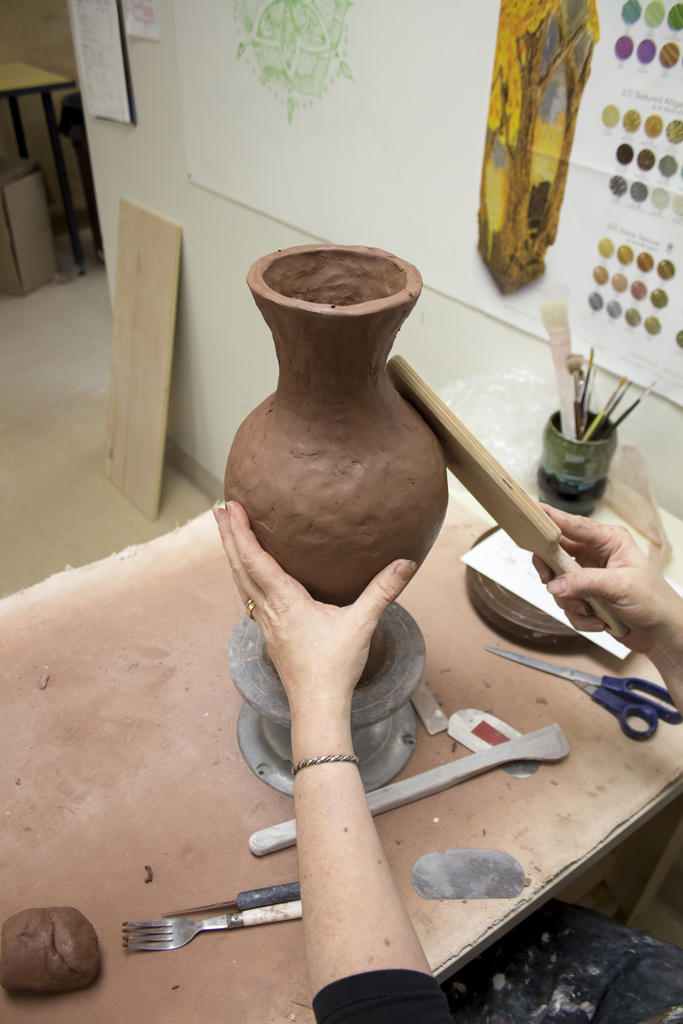
Use paddle (lightly) and scraper to shape and smooth the vessel.
Add handles, made as coils. Make sure to slip and score to make secure attachments. Use wood tools to smooth transition to body.
Helpful Hint: To prevent handles from drying faster than the body and cracking, wrap handles tightly in plastic, or coat with wax.
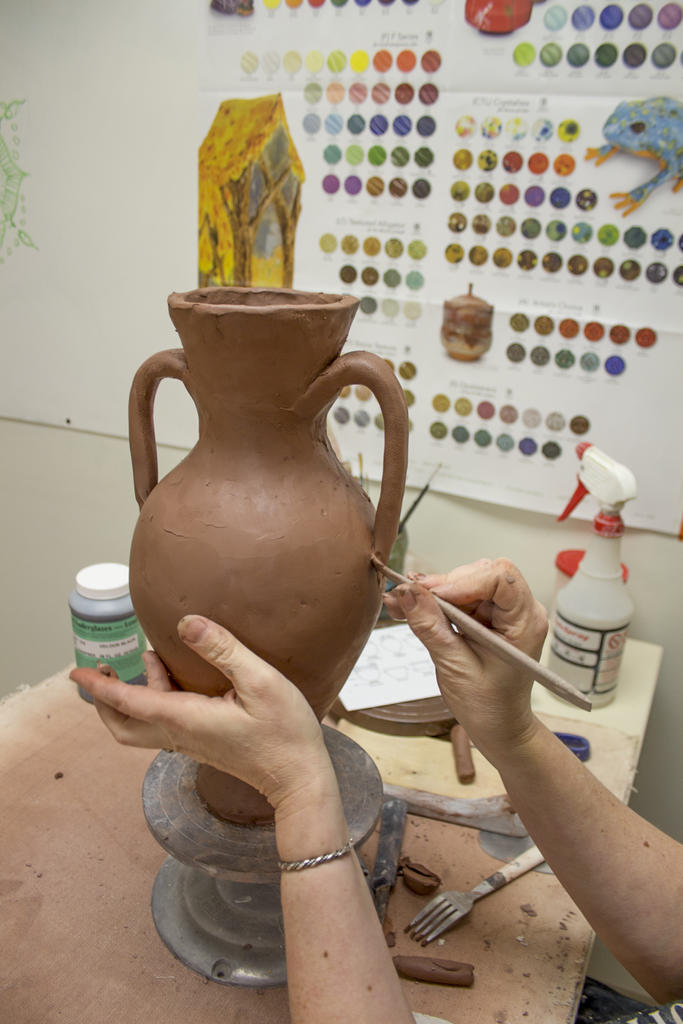
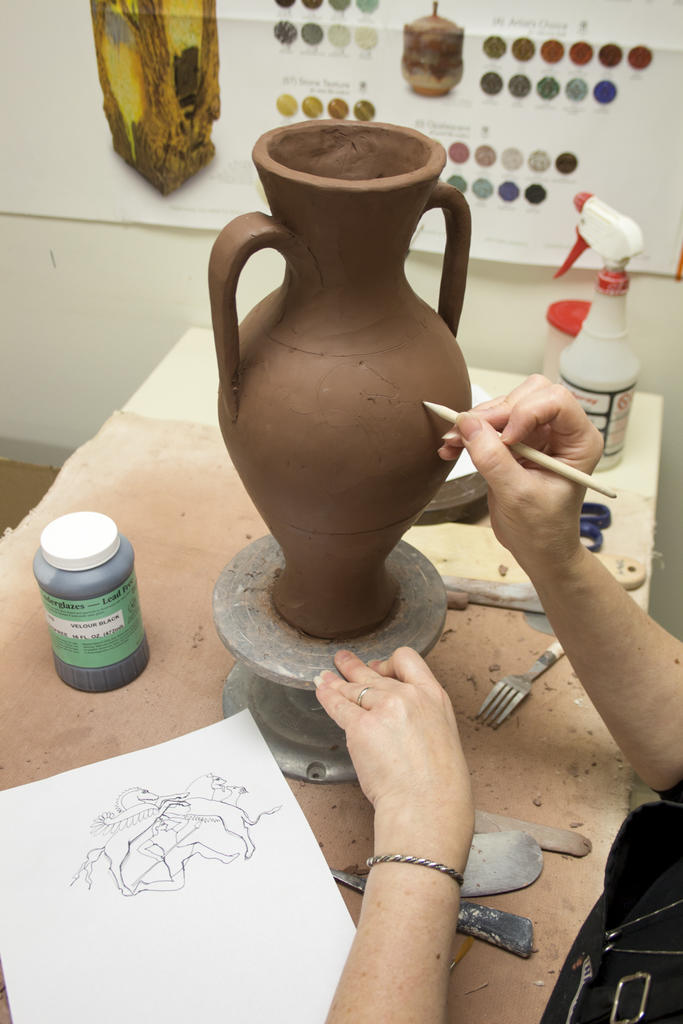
Use wood tool or pencil to draw or trace image lightly onto leatherhard vessel.
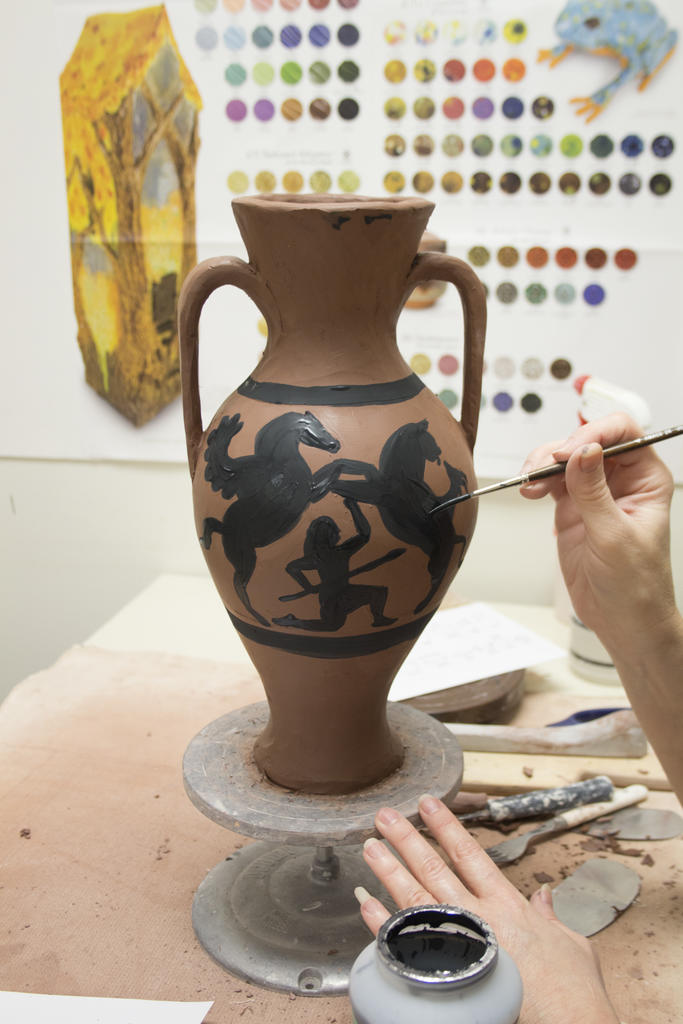
Apply two to three coats of black underglaze, roughly blocking in the figures. Let underglaze dry completely between coats.
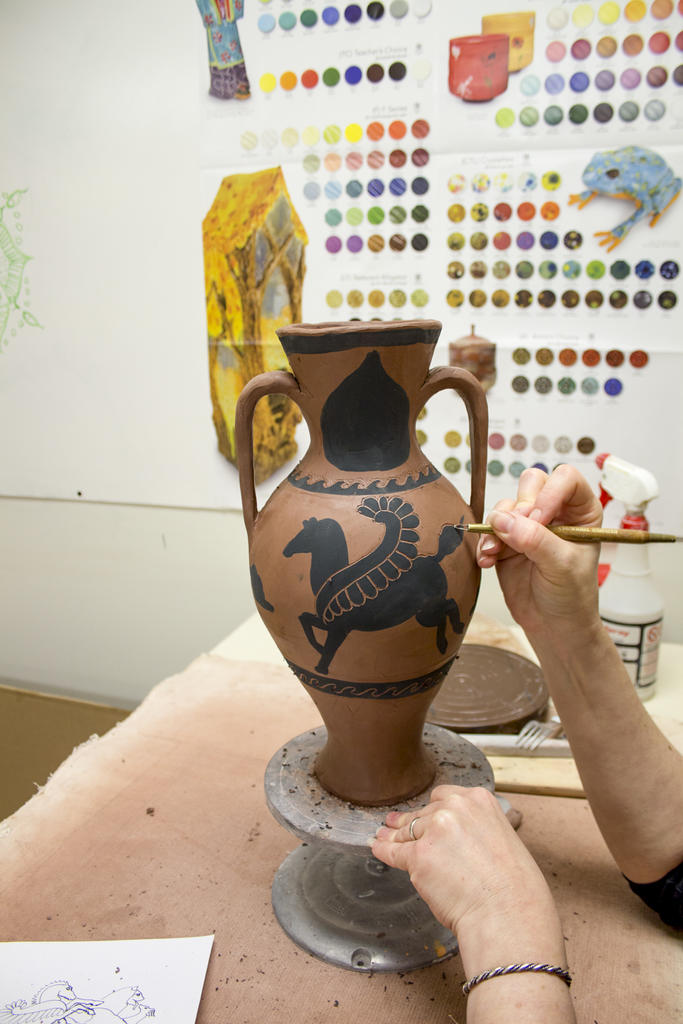
Allow underglaze to become dry to the touch. While clay is still leather-hard, use a sgraffito tool to etch lines in the underglaze. Let dry before brushing off the crumbs.
Bisque to cone 04. Then, glaze with 2 even coats of LM-10 Transparent Matt glaze, and fire to cone 05.